Everyone already knows how to play. That is the point.
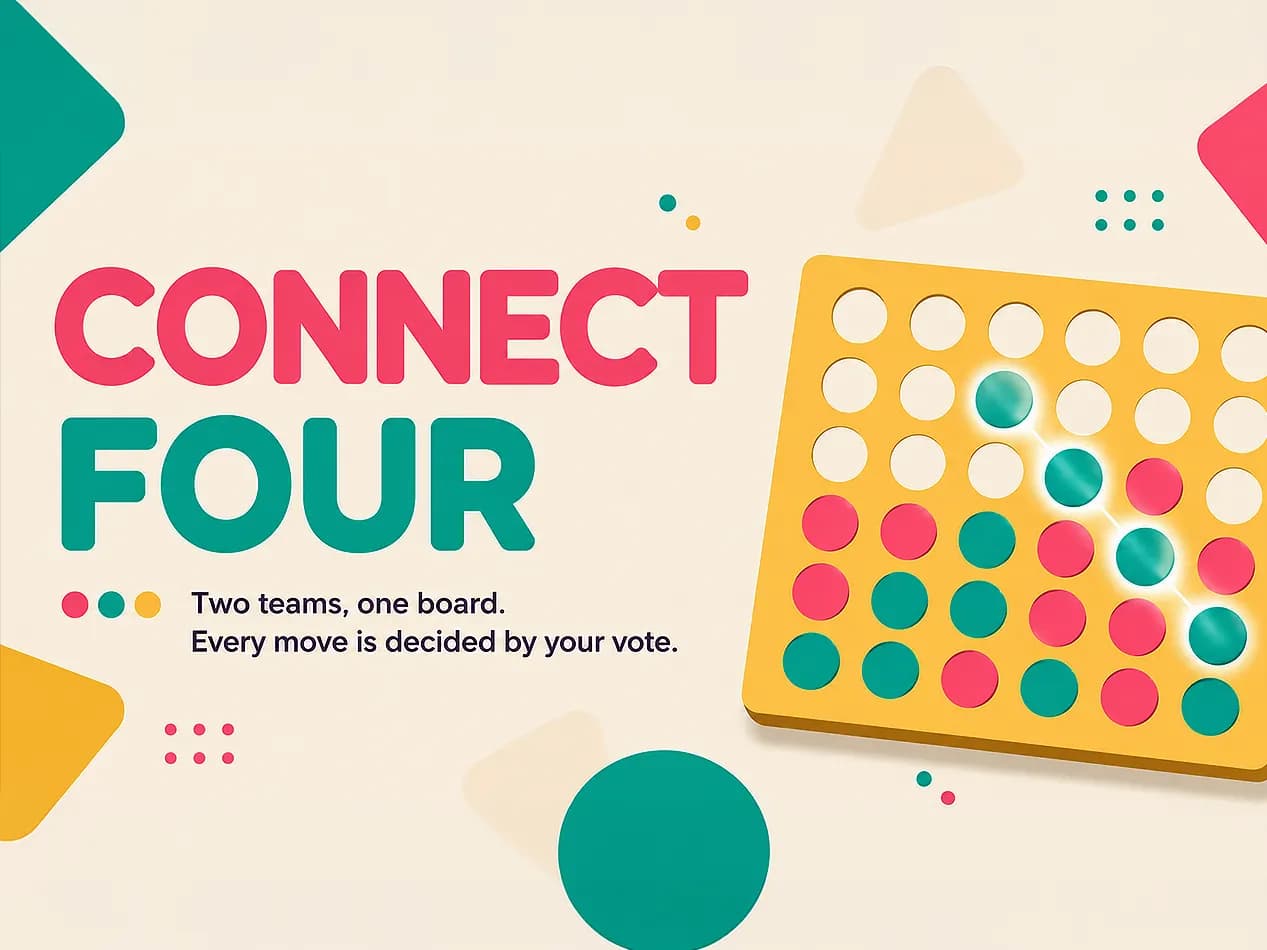
Two teams, one grid on the big screen. Drop a marker into a column, get four in a row before the other side does. Nobody needs the rules explained, which is the whole reason it works in front of a room that has just sat down.
Everyone votes, every turn
When it is your team's turn, everyone on it picks a column on their phone and the most popular choice is the one that drops. A few hundred people can play the same board without anyone waiting for a turn.
More thinking than a coin toss, less than a quiz
This is the bit that keeps a room watching. You can see the other team building a threat and block it, or set up two at once so they can only stop one. Enough strategy that choices feel like choices, not so much that anyone has to concentrate hard.
Made for the gap in the programme
The few minutes while the stage resets. A warm-up before a workshop that needs people thinking. An opener that gets two halves of the room lightly competitive before the real activity.
If you want the same shape but faster and simpler, that is Tic-Tac-Toe.
Put your own brand on the board
Swap the markers for your logos, icons or images, and set team names, timers, backgrounds, music and the visual theme to match the event.
Two teams, and that is the format
It splits the room in two and keeps it that way, so it is not the one for individual play or for four departments in a rivalry. It is also a filler by design. Run it in the gaps rather than as the centrepiece, and it will not outstay its welcome.