The whole game is deciding when to guess.
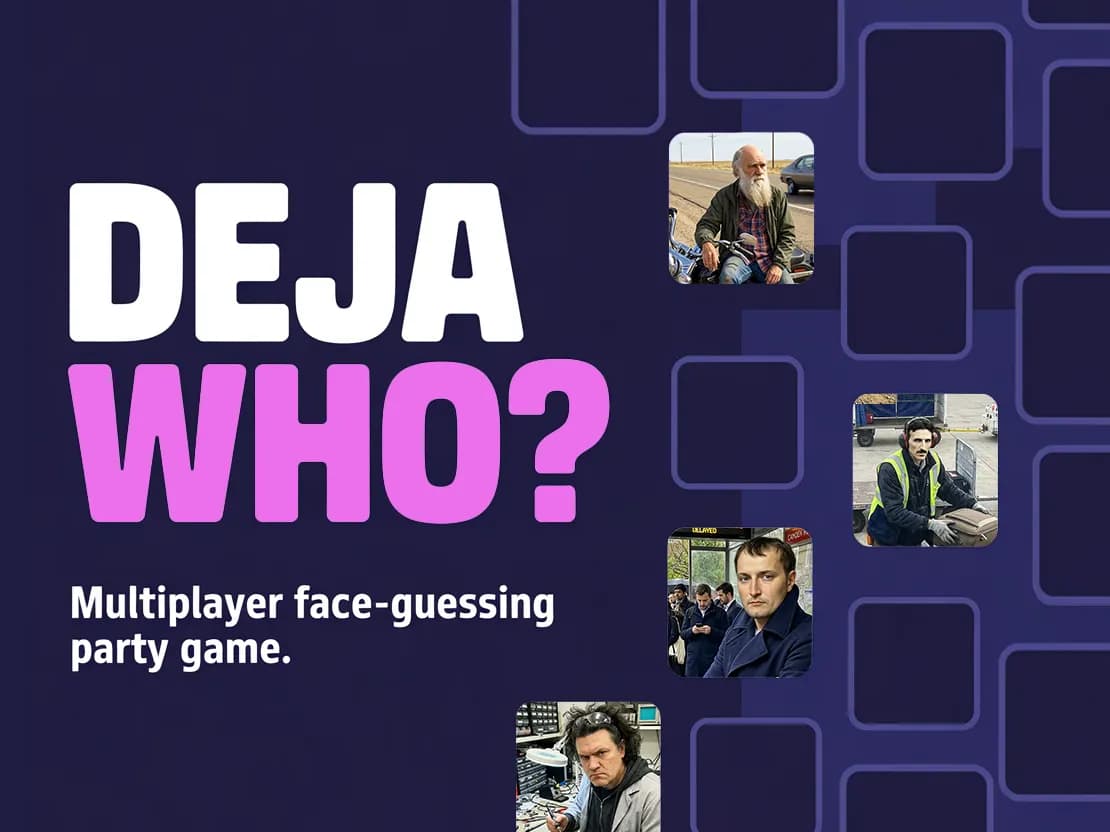
A face appears on screen out of focus and slowly sharpens. It belongs to somebody who looks like a famous person. The moment you think you know who, you answer.
Points are highest while the image is still a mess and drop with every second it clears.
Guess early, or be sure
Wrong answers cost you, so this is a bet rather than a quiz. It is the reason a room will watch a picture load instead of checking their phones.
Everybody is doing the same arithmetic at the same time, and the groans when somebody calls it two seconds too early are half of what you are paying for.
Put your own colleagues in it
There are ready-made celebrity packs for Europe, America and worldwide, so you can run it with nothing prepared.
Or you upload photos of your own people next to the celebrity they keep getting compared to, and the room watches their colleague come into focus. That version is the one people talk about afterwards. The packs are the warm-up.
Almost nothing to read
There is barely any text in the game. Nobody is translating, nobody is reading at speed, and nobody is at a disadvantage because the round is in their second language. That is not true of most quizzes.
Where it works
Conference openers and the gap between sessions. Company parties and team days, especially with the colleague photos in it. Any mixed audience where you cannot assume much about who is in the room.
What it is not
A visual game crosses languages. It does not cross cultures. The faces have to be ones your room actually knows, and a crowd that grew up watching different television will not recognise the same people. A round nobody gets is a long two minutes. Check the pack against your audience before you run it.