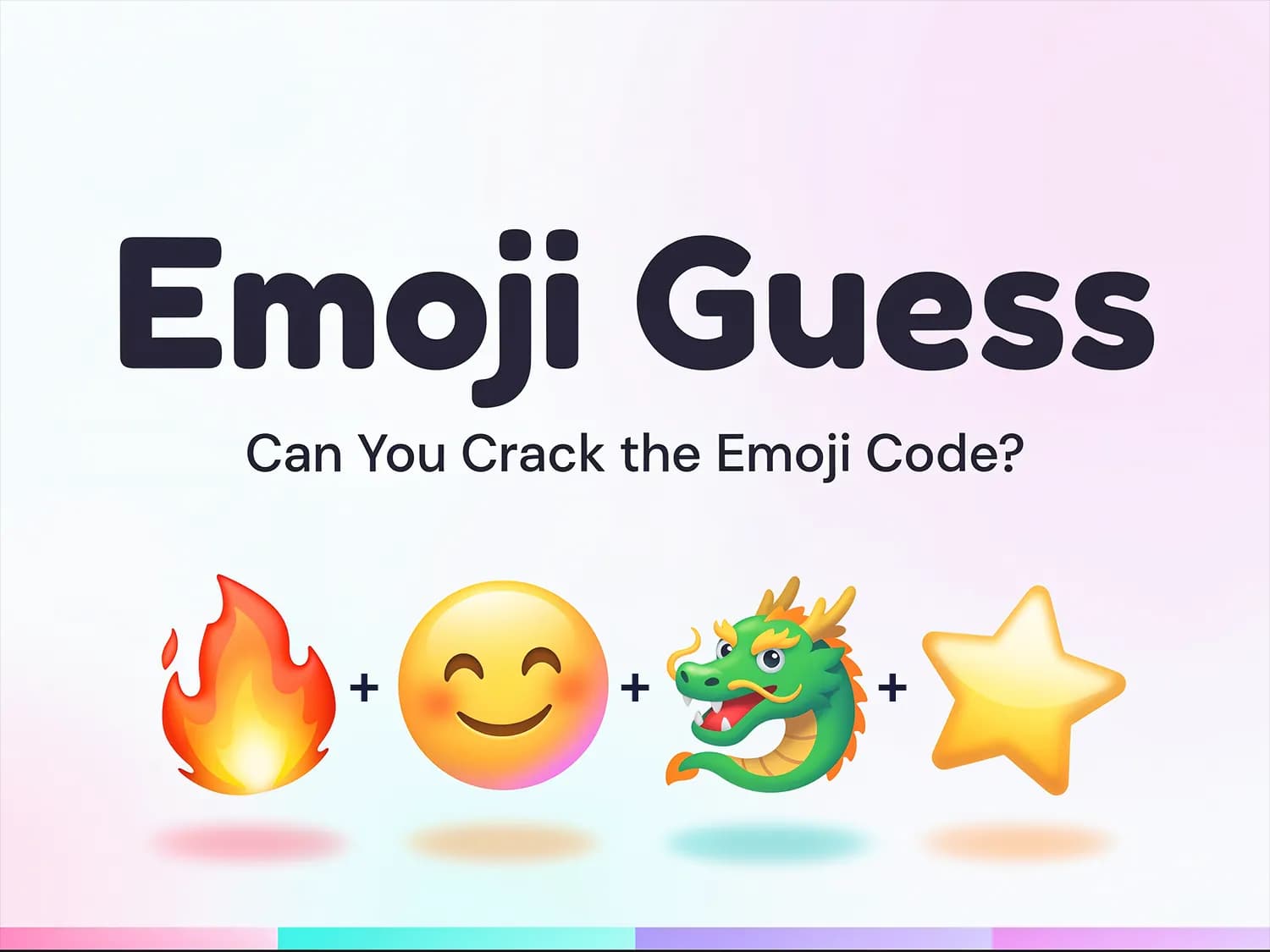
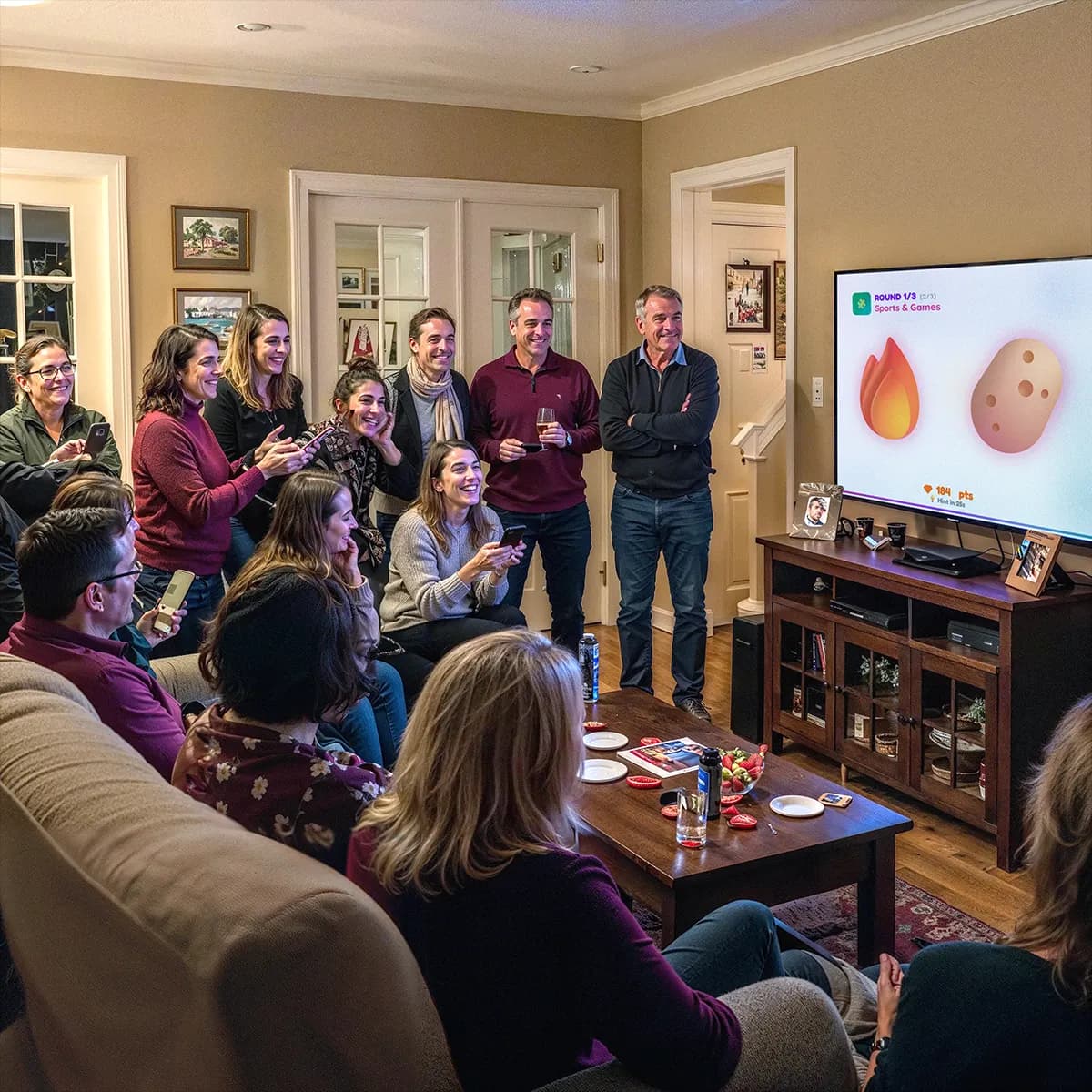
A few emojis on a screen, and a room shouting at it.
Puzzles appear on the big screen and everyone answers on their own phone. A new theme each round, travel one minute and history the next, so nobody gets to be the expert for long.
It is forgiving on purpose
Near enough counts. Spell it wrong, get the wording slightly off, answer with the obvious synonym, and it still takes it.
That sounds like a small setting and it is the reason this game works. Nobody spends the round feeling stupid or arguing that they meant the right thing, so the mood stays where you want it. Every puzzle also comes with its answer explained afterwards, which is where the groaning happens.
Every round is new
The puzzles are generated rather than pulled from a fixed list, so the same group can play it again next month without meeting anything they have seen before. It is one of the few games here you can put on repeat.
There is a kids mode, which is rarer than it sounds
Almost nothing works in a room with a nine year old and their grandparents in it at the same time. This does. If you run family days, birthday events or anything with a genuinely mixed crowd, that is the reason to look at this rather than anything else in the library.
Where it works
Office social afternoons and Friday wind-downs. Classroom warm-ups and the last ten minutes of a lesson. Family gatherings and birthday parties. A pub night, between rounds of something heavier.
Emojis need no translation, so a mixed-language room is not a problem.
What it is not
A conference game. The tone is light and a bit daft, and in a formal room that reads as filler rather than a highlight.