
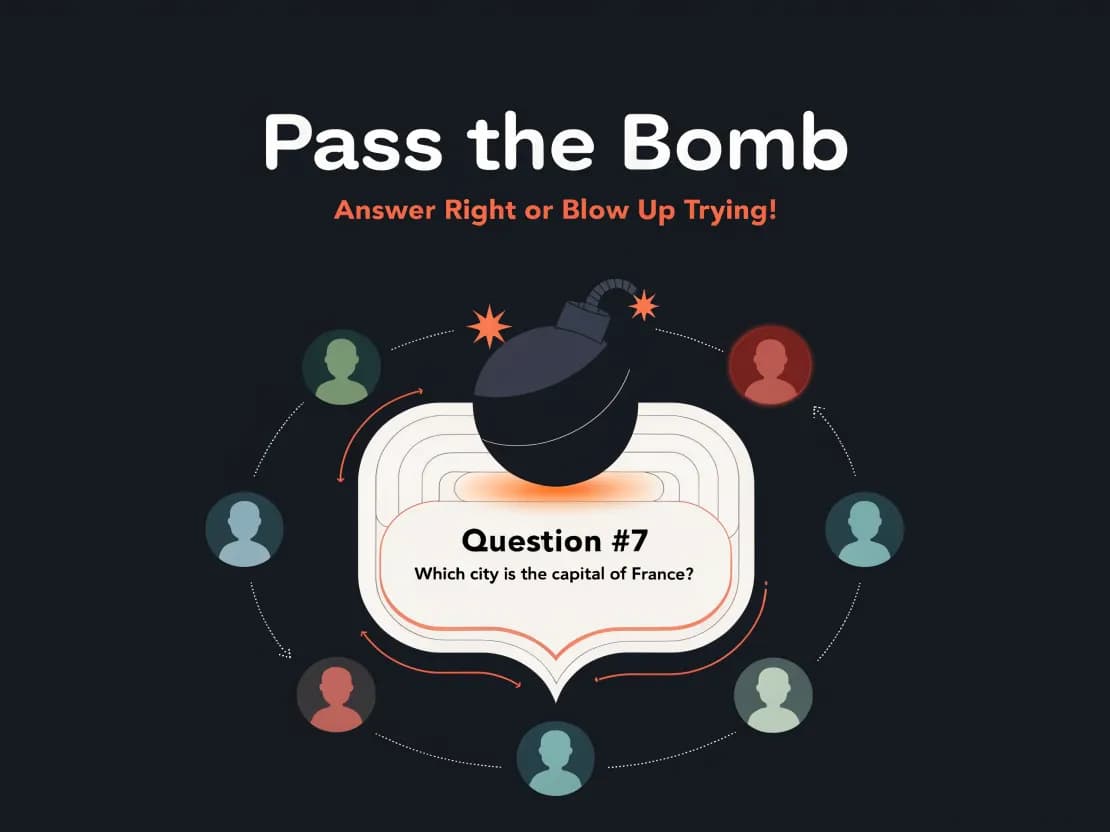

A question, a timer, and somebody still holding it when the time runs out.
Answer correctly and the bomb moves on to the next player. Answer slowly, or wrong, and it is still in your hands when it goes off. One player out, and the game closes up around whoever is left.
The room watches
Up to 25 people play on their phones. Everyone else watches it happen on the big screen, and that is the part most games here do not have.
It makes this a stage act rather than a group activity. If you have a room of two hundred and a slot on the main programme, this is the one in the library built for that shape: a handful of people under pressure in front of everybody else, getting down to the last two.
The timer is the dial
Difficulty, timer length and theme are all yours to set. The timer is the one that changes the game completely. Give people ten seconds and it is a party. Give them three and the room starts shouting answers at the stage, which is usually the point.
Nobody needs the format explained
Hot potato with questions. People understand it before you have finished the sentence, which means you are not spending the first round teaching anyone anything.
Where it works
A main-stage slot with an audience. Classrooms, where 25 is a class and the elimination is the fun part. Family gatherings and parties. Anywhere you want a few people performing rather than everyone quietly tapping at a phone.
What it is not
A game everybody plays. Twenty-five is the cap, and elimination means that number only falls. Ten minutes in, most of the room is watching. That is exactly right if you wanted a stage game and wrong if you promised everyone a turn.
It is also not gentle. People go out, in front of the room, because they were too slow. That lands as funny with a group who are up for it and badly with one that is not, so read the room before you pick it.