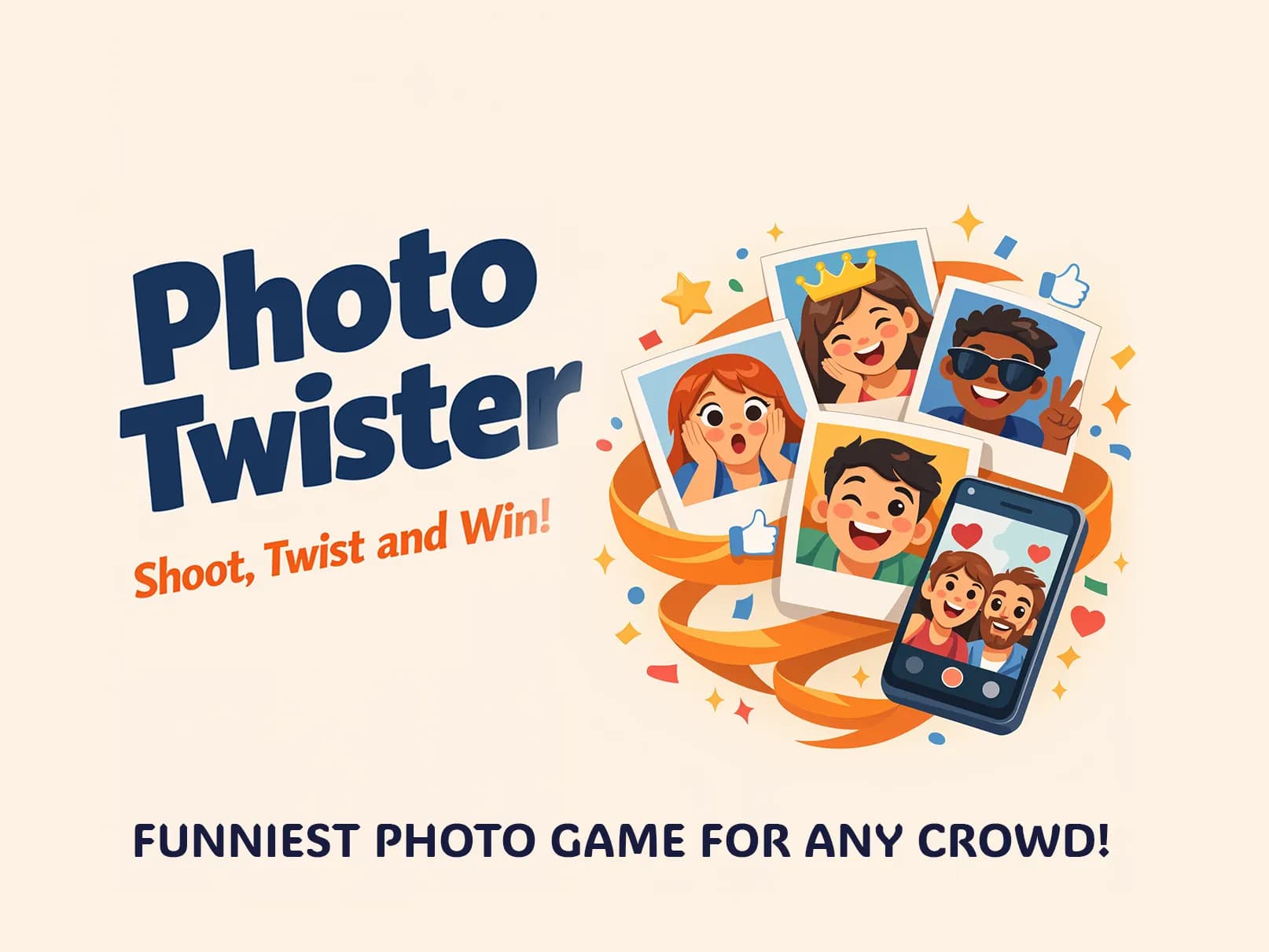
Stage the photo. Then lose control of it.
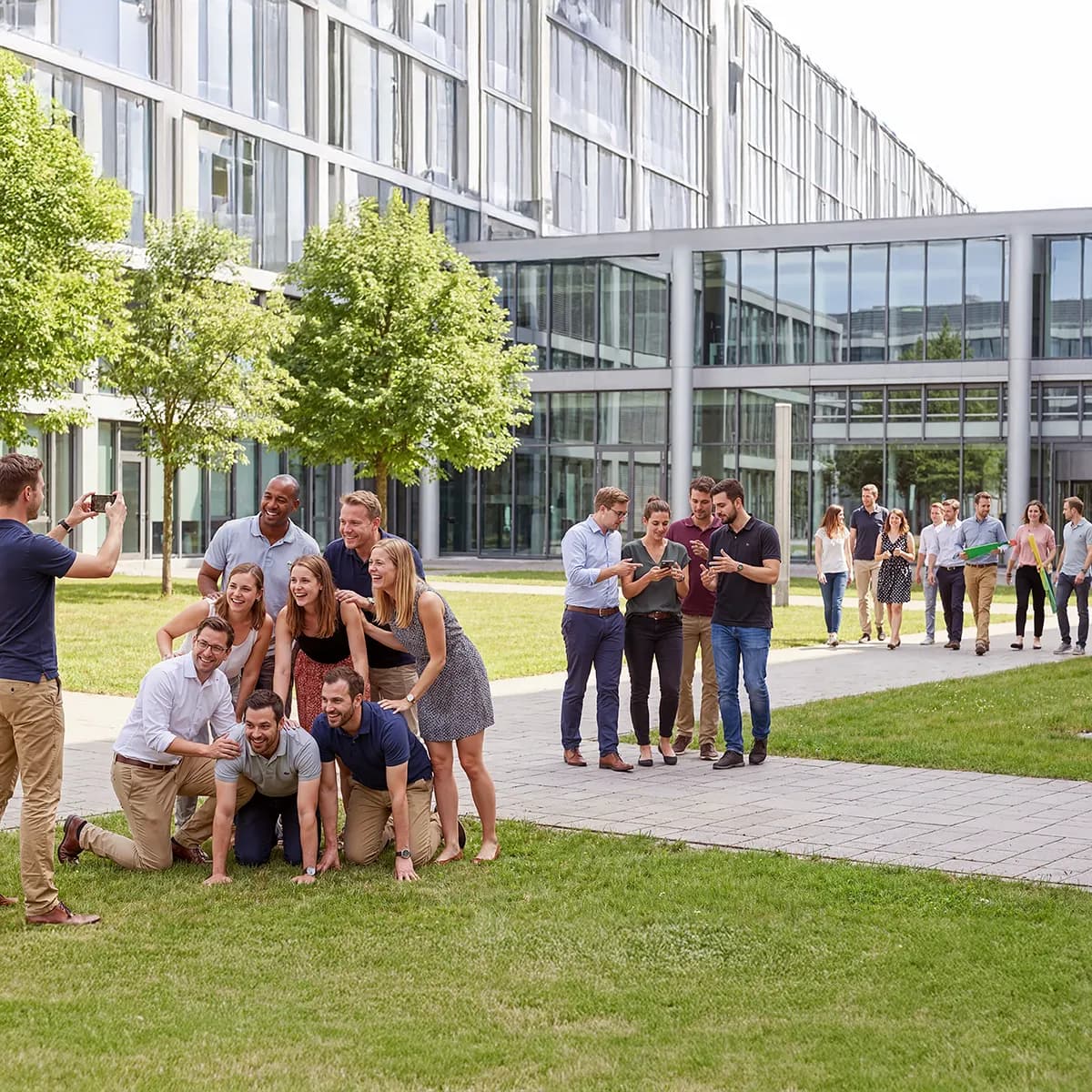
Each team gets a scene to recreate and a few minutes to stage it. People climb on chairs, borrow coats, argue about who plays the villain. Then they take the picture and send it in.
That is when it stops being your photo. The other teams get hold of it and use AI to twist it into something else entirely, and the version that comes back is never the one you made.
You do not have to be creative
This is the part that surprises people. The team that overthinks its photo rarely wins the room, because the twist is where the laugh lives and the twist is not theirs to control.
So the colleague who hates this sort of thing does not have to perform. They just have to stand in the photo.
Nobody is watching
Everyone is either staging something or twisting something, all the way through. There is no queue and no audience, which is unusual for a creative game and is why it holds a room of forty.
Who it's for
Team days, company parties and offsites, for groups of roughly 15 to 60. It suits people who already know each other well enough to be silly, so it is a better main activity than an icebreaker.
It needs a room, and a bit of licence
Everyone has to be in the same place, because staging a scene together is the whole game. It does not work remotely.
It is also deliberately silly and the twists are unpredictable, so it is the wrong choice for a client-facing or formal event. Save it for the part of the day where that is the point.
What you can change
Prompts, themes and tone, the time limits and the round structure. Set the prompts to your company and the photos become about your year rather than a generic scenario.