The one format nobody has to have explained.
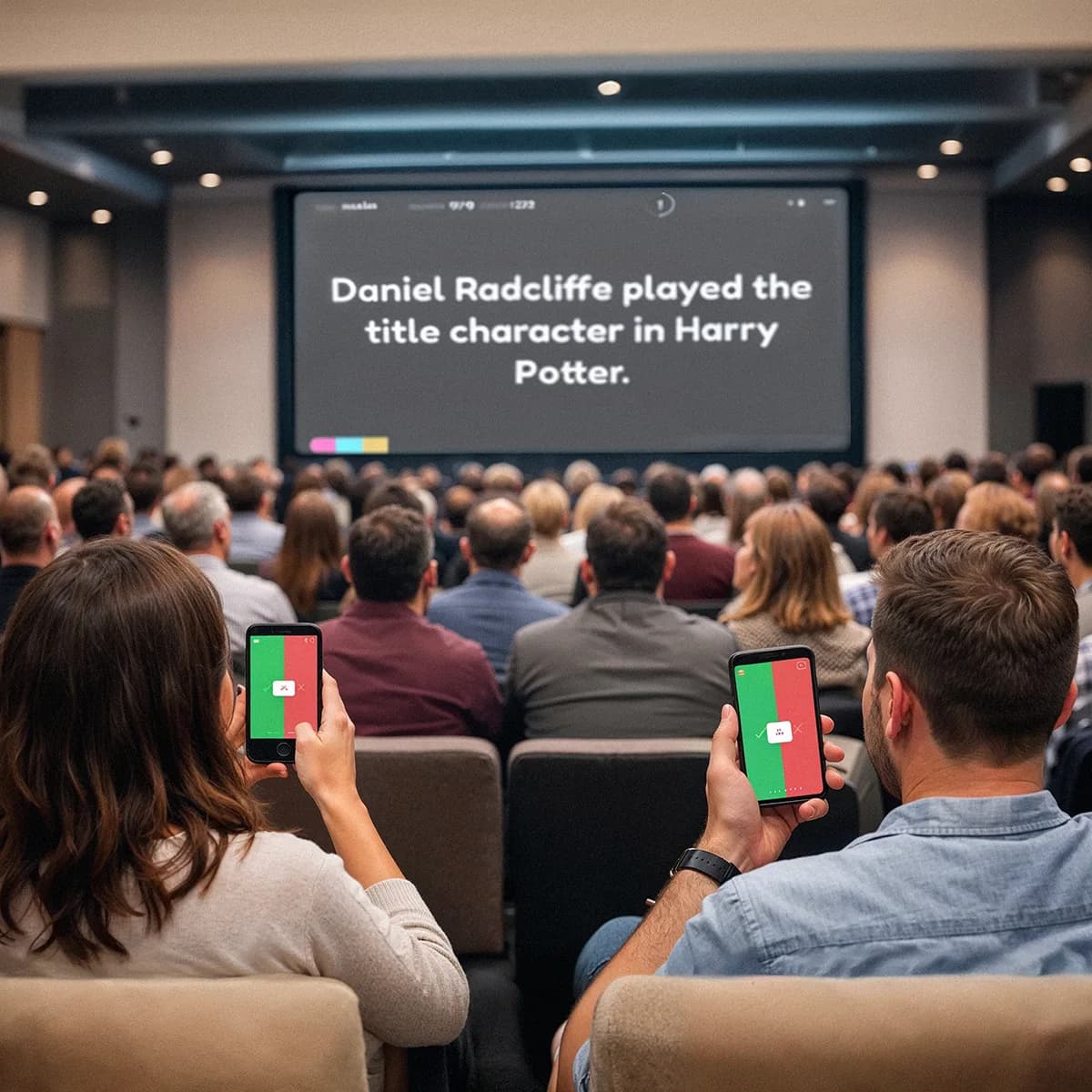
True or false. Two buttons. There is no round where somebody is still working out the rules, which is why it holds a room of three hundred as easily as a room of thirty.
It writes itself
Pick a topic and the statements are generated on the spot, in the language you choose. Your company, your industry, the city you are all in, or something completely daft.
Nothing to prepare, nothing to write the night before, and you can decide the topic while people are still sitting down.
Nobody drops out at round four
That is the usual problem with a quiz in front of a big audience. Someone gets three wrong early, works out they cannot win, and stops playing.
Scores here move in tiers rather than a straight leaderboard, so a bad start does not end your game. People stay in it, which is the difference between a room playing and a room watching.
Built for the big room
Conference openers, the post-lunch slot, all-hands warm-ups, onboarding days with a hundred new starters. A mixed crowd where you cannot assume anyone knows the same things.
It works with a small group too, though it is at its best when the room is big enough that the reactions carry.
What you can change
Difficulty, from light and funny to genuinely hard. Round length and total game time, so it fits the gap you have. The theme, whether that is your company, a product, a syllabus or pop culture. Individually or in teams.
What it is not
The statements come from AI, so it is the wrong tool for anything where exact accuracy matters. Product claims, legal or medical content, anything regulated. A false statement that sounds plausible is the whole point of the game and the last thing you want in front of a room if the subject is your own product.
It is also a game of reactions rather than a test of who knows most.