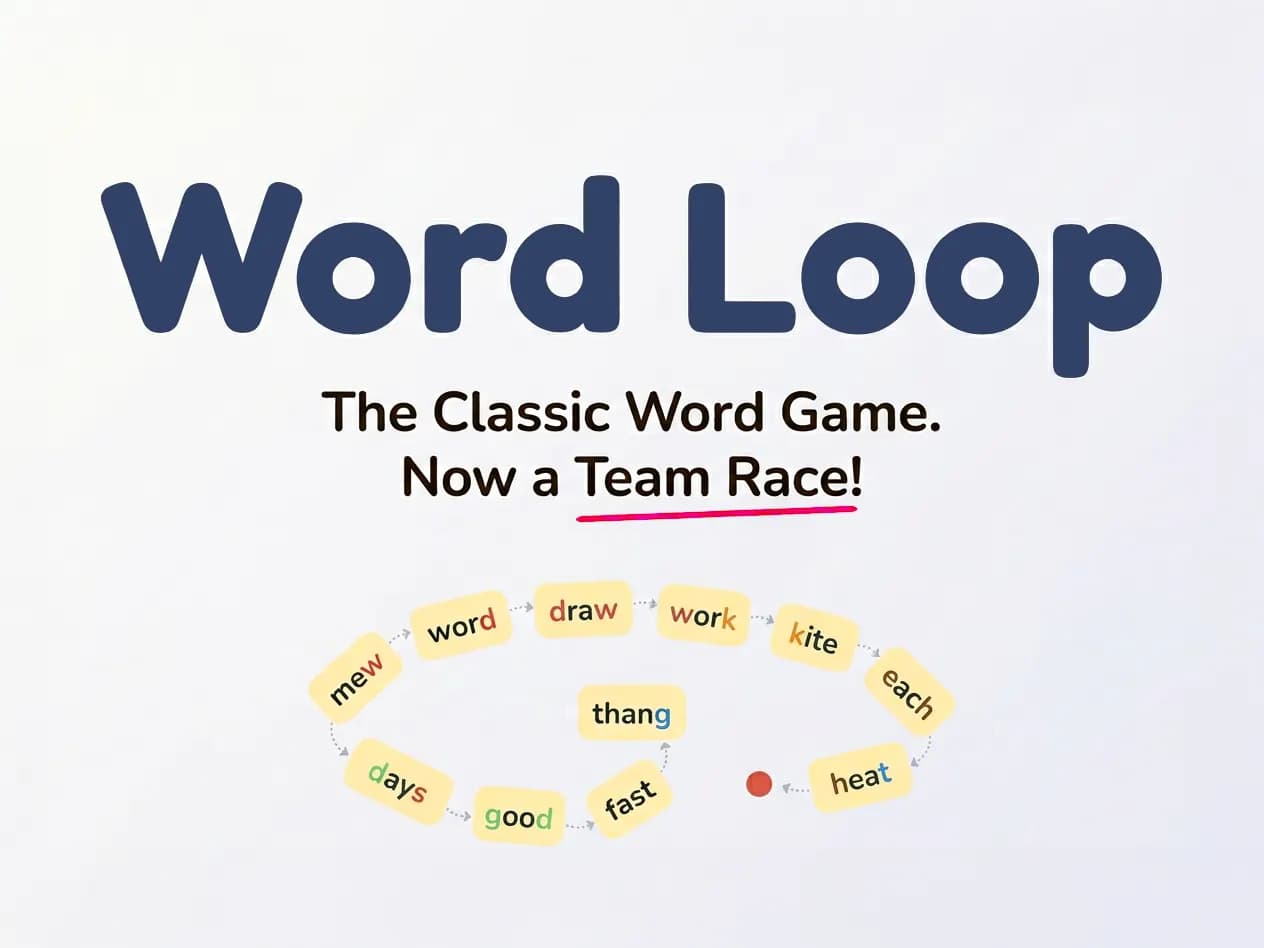
Somebody says a word, the next one has to start with the letter it ended on.
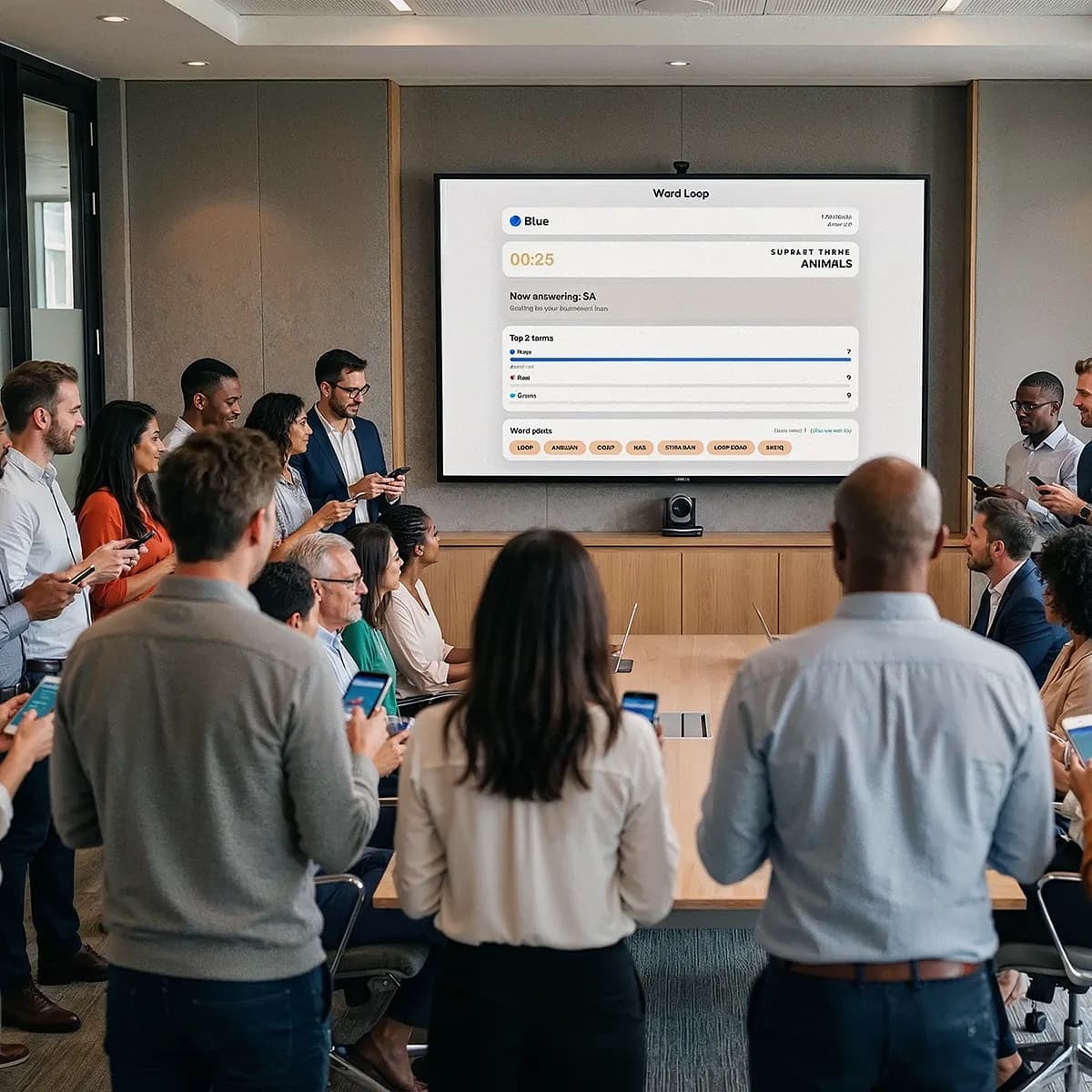
Teams work down a chain on their phones, against the clock. Simple enough that nobody needs it explained, hard enough that a team will get stuck on the letter Y and lose thirty seconds arguing.
The part that usually ruins this game is handled
Is that a real word. You already said that one. That is two words, not one.
Every version of this played in a pub ends up there. Here the platform checks each entry as it arrives, rejects repeats, misspellings and things that are not words, and nobody has to adjudicate anything. The argument is gone and the speed stays.
Up to twenty-five teams
Seven people per team, twenty-five teams, so around a hundred and seventy-five players. That is an all-hands rather than a table, and everyone is typing at once rather than waiting their turn.
Round length is yours to set, so it fits the slot you have rather than the other way round.
It works in other languages
Not a translated interface with English words underneath. The chain itself runs in the language you choose, and there is no fixed word list, so anything real counts.
Everyone in one game needs to share a language, but that language does not have to be English.
Where it works
Company all-hands and team days, where the size actually gets used. Classrooms, where a word chain has always been a decent way to end a lesson. Pub nights. Family gatherings.
What it is not
For a room with no common language. Most of the library works with any crowd because the games are visual. This one is words, and whoever is most comfortable in the language being played has an advantage nothing corrects.