
Number Chain
A trust exercise that doesn't try to build trust.
Most trust exercises aim to make people feel a bit warmer towards each other. Number Chain does something more useful: it shows your group what trust is actually worth, and what it costs when it's missing, with everything else kept exactly the same.
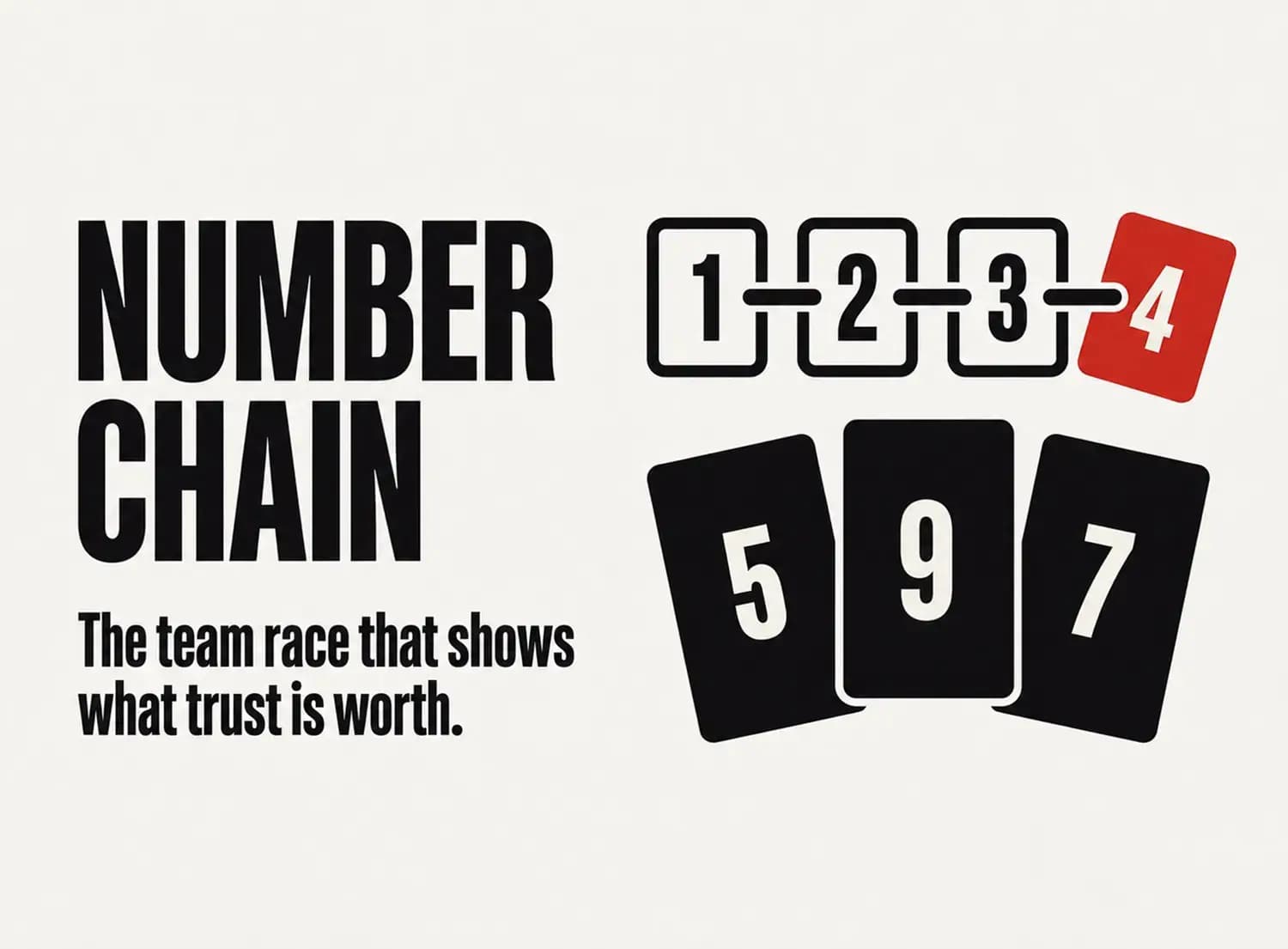
On the surface it's a simple team competition. Each team builds number chains as fast as it can: one person plays 1, someone plays 2, then 3, and so on. Every team has the same goal.
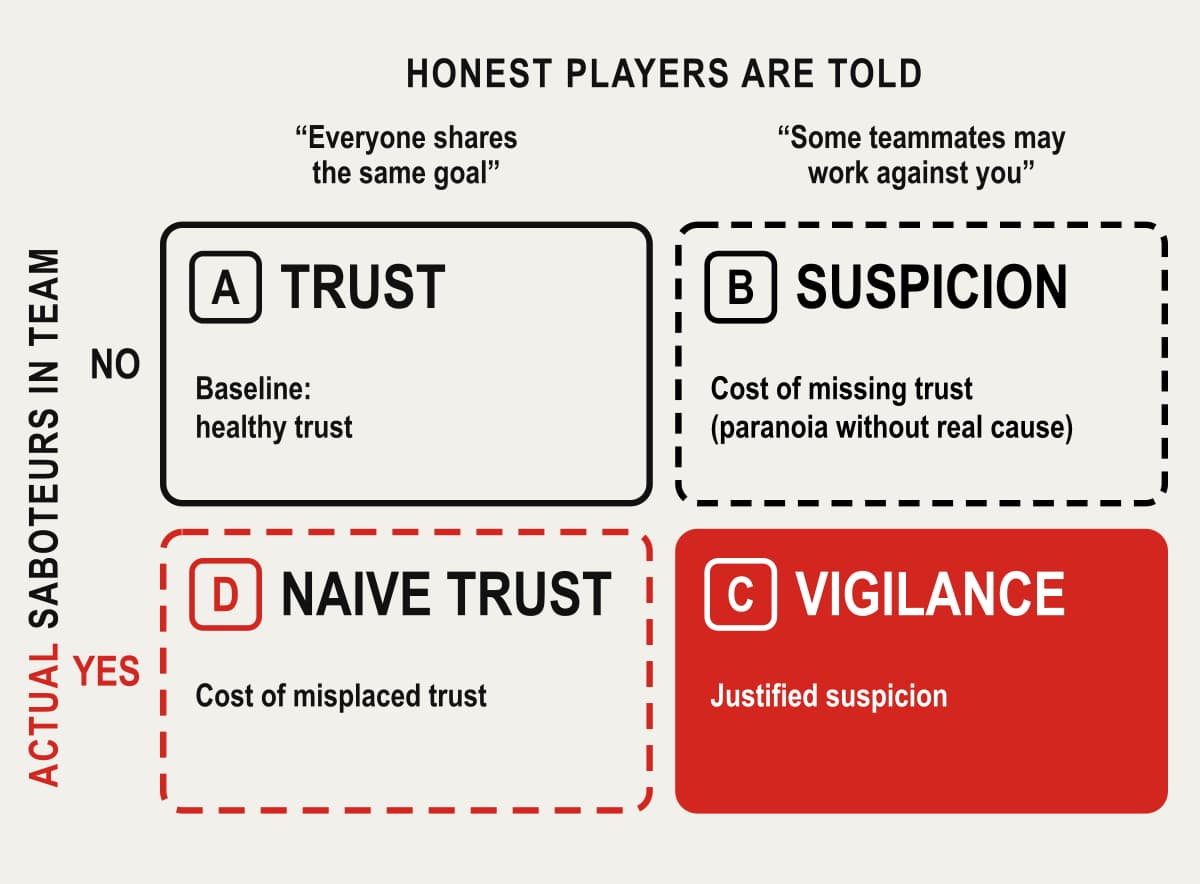
But every player also gets a private brief. Some teams are told everyone is on their side. Some are told there may be saboteurs among them. And what they're told isn't always true.
The result is a room full of teams doing the same task with the same kind of people, and (presumably) getting very different results.
How it plays
- You set the teams, the game sets the roles. Trust, Suspicion, Vigilance and Naive trust. Players never know which setup they're in.
- Private briefs that can't leak. Each player reads their personal goal, then it's hidden. If someone says "let's all show our phones", every screen looks the same.
- Live scoreboard on the big screen. Teams see each other's progress while they're still wrestling with their own situation.
- Vote-outs with a real trade-off. Teams can remove a suspected saboteur, but they lose time and a pair of hands, if they are wrong.
- Built-in debrief support. A ready structure for the conversation afterwards, which you can shape to your own session.
Why to use it
Number Chain creates base for deeper and specific trust questions: what trust looks like, what it feels like, and what its absence costs, all grounded in something everyone has just experienced together.
It works as an opener for any workshop where trust, collaboration or team performance is on the agenda. And because the software handles teams, roles and scoring, a single facilitator can run it comfortably. With paper briefs and card decks, that took two.
At a glance
- Group size | 10–30 people (minimum: two teams of three, maximum four teams of eight)
- Teams | 2–4 teams, ideally around five players each
- Duration | About an hour: 10–20 min play + 20–40 min debrief
- You need | A phone per player, a big screen, one facilitator
- Works for | Team trainings, leadership workshops, trust and collaboration sessions
It is not a game for casual play. It is rigged team-building exercise.
One tip before you start
Don't call it a trust exercise. Introduce it as a quick competition between teams, and let the debrief reveal what it was really about.
Available in following languages:
- English
- Spanish
- German
- French
- Danish
- Dutch
- Estonian
If you need an additional language let GFC know and I can add required language.